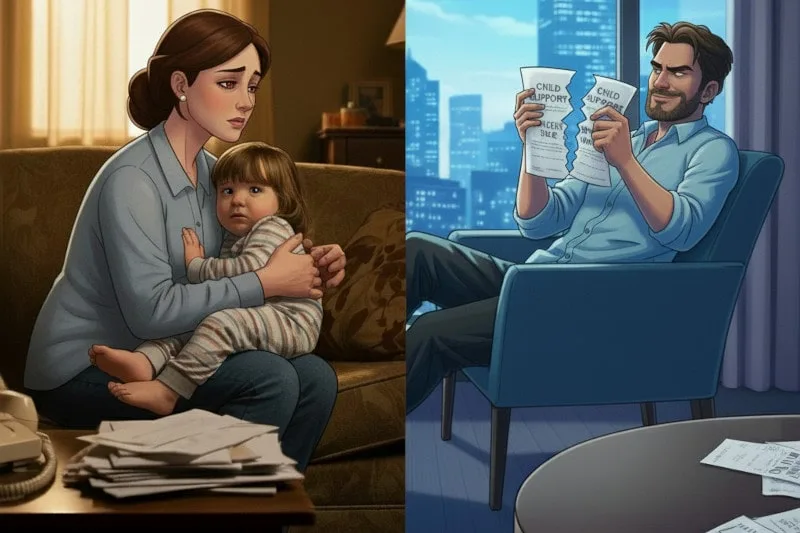



In Nevada, child support orders are designed to provide consistent financial support for children after a separation or divorce. While these orders can be modified, it’s not automatic — and many life changes don’t meet the legal bar. Not every financial shift or family event will qualify, and that’s where many parents go wrong.
This post explains what doesn’t usually qualify for a child support modification under Nevada law — and why.
The “Substantial Change” Rule in Nevada
Under NRS 125B.145, a parent must show a material, substantial, or continuing change in circumstances to modify child support. Courts are cautious — they want to avoid constant changes that could disrupt the child’s life.
Even without a substantial change, Nevada allows a review every three years, but that doesn’t guarantee a new amount. The court still applies strict legal standards.
Common Denial Reasons by Nevada Courts
Reducing your income on purpose? That won’t work in Nevada. Courts may “impute” income — meaning they’ll base support on what you could be earning based on your job history, training, and market opportunities. If you quit your job, switch to a lower-paying one, or work part-time without a valid reason, expect to still owe the same amount.
Bottom line: Nevada courts don’t reward attempts to dodge support obligations.
Got a small raise? Lost a few hours one month? Nevada law specifically says a change of less than 20% in gross monthly income usually isn’t enough to justify modification.
These small swings are considered normal and are expected to be absorbed by the current order.
Short-term issues like a brief illness, layoff, or emergency expense are not usually enough. Nevada courts look for long-term or permanent financial changes.
If you’re between jobs for a few weeks or recovering from surgery, the court sees that as temporary — and the support order stays in place.
Courts won’t modify support based on something that was already expected when the order was set. That includes things like a known retirement date, a child aging out of daycare, or a chronic medical issue that was already being treated.
The key: For a change to justify modification, it must be unforeseen and not planned for.
If you remarry, Nevada courts typically won’t consider your new spouse’s income. A stepparent has no legal obligation to support a child unless they adopt the child. Even if your household finances improve, that doesn’t affect the legal child support calculation.
Even if both parents agree to change the payment amount on their own, that agreement is not legally enforceable unless approved by a Nevada judge.
For example, if you agree to pay less for a few months, the court can still treat that as unpaid support — and the receiving parent can seek enforcement based on the original order.
Lesson: Always go through the court to make it official.
This surprises many people: In Nevada, child support can’t be changed retroactively. A court can only adjust support going forward — from the date you file the motion to modify.
So if your income drops, don’t wait. The longer you delay filing, the more you’ll owe under the old order — and the court can’t go back and forgive it.
Summary: What Usually Doesn’t Justify a Modification
Child support won’t usually change if your situation involves:
- A short-term financial setback
- A raise or dip of less than 20%
- Voluntary reduction in work
- A new spouse with income
- A change you already expected
- An informal agreement between parents
- Missed payments before filing for modification
Secure Your Child’s Future Support Payments
Nevada’s child support laws are specific — and strict. Modifications are no exception.
If you think your situation may qualify, talk to a child support lawyer at Smith Legal Group before making changes on your own.
Call us now at (702) 919-5956 today to schedule your free consultation. We can help you understand your options under NRS 125B.145 and NAC 425, and make sure your rights (and your child’s stability) are protected.
Reducing your income on purpose? That won’t work in Nevada. Courts may “impute” income — meaning they’ll base support on what you could be earning based on your job history, training, and market opportunities. If you quit your job, switch to a lower-paying one, or work part-time without a valid reason, expect to still owe the same amount.
Bottom line: Nevada courts don’t reward attempts to dodge support obligations.
Got a small raise? Lost a few hours one month? Nevada law specifically says a change of less than 20% in gross monthly income usually isn’t enough to justify modification.
These small swings are considered normal and are expected to be absorbed by the current order.
Short-term issues like a brief illness, layoff, or emergency expense are not usually enough. Nevada courts look for long-term or permanent financial changes.
If you’re between jobs for a few weeks or recovering from surgery, the court sees that as temporary — and the support order stays in place.
Courts won’t modify support based on something that was already expected when the order was set. That includes things like a known retirement date, a child aging out of daycare, or a chronic medical issue that was already being treated.
The key: For a change to justify modification, it must be unforeseen and not planned for.
Even if both parents agree to change the payment amount on their own, that agreement is not legally enforceable unless approved by a Nevada judge.
For example, if you agree to pay less for a few months, the court can still treat that as unpaid support — and the receiving parent can seek enforcement based on the original order.
Lesson: Always go through the court to make it official.
This surprises many people: In Nevada, child support can’t be changed retroactively. A court can only adjust support going forward — from the date you file the motion to modify.
So if your income drops, don’t wait. The longer you delay filing, the more you’ll owe under the old order — and the court can’t go back and forgive it.